-38% say God created man in present form, lowest in 35 years
-Same percentage say humans evolved, but God guided the process
-Less-educated Americans more likely to believe in creationism
Higher education levels are associated with less support for creationism and higher levels of belief in the evolutionary explanation for human origins.
Search is a central term in the work of Dr. Dr. William Dembski jr, Dr. Winston Ewert, and Dr. Robert Marks II (DEM): it appears in the title of a couple of papers written by at least two of the authors, and it is mentioned hundreds of times in their textbook “Introduction to Evolutionary Informatics“. Strangely – and in difference from the other central term information, it is not defined in this textbook, and neither is search problem or search algorithm. Luckily, dozens of examples of searches are given. I took a closer look to find out what DEM see as the search problem in the “Introduction to Evolutionary Informatics” and how their model differs from those used by other mathematicians and scientists. Continue reading →
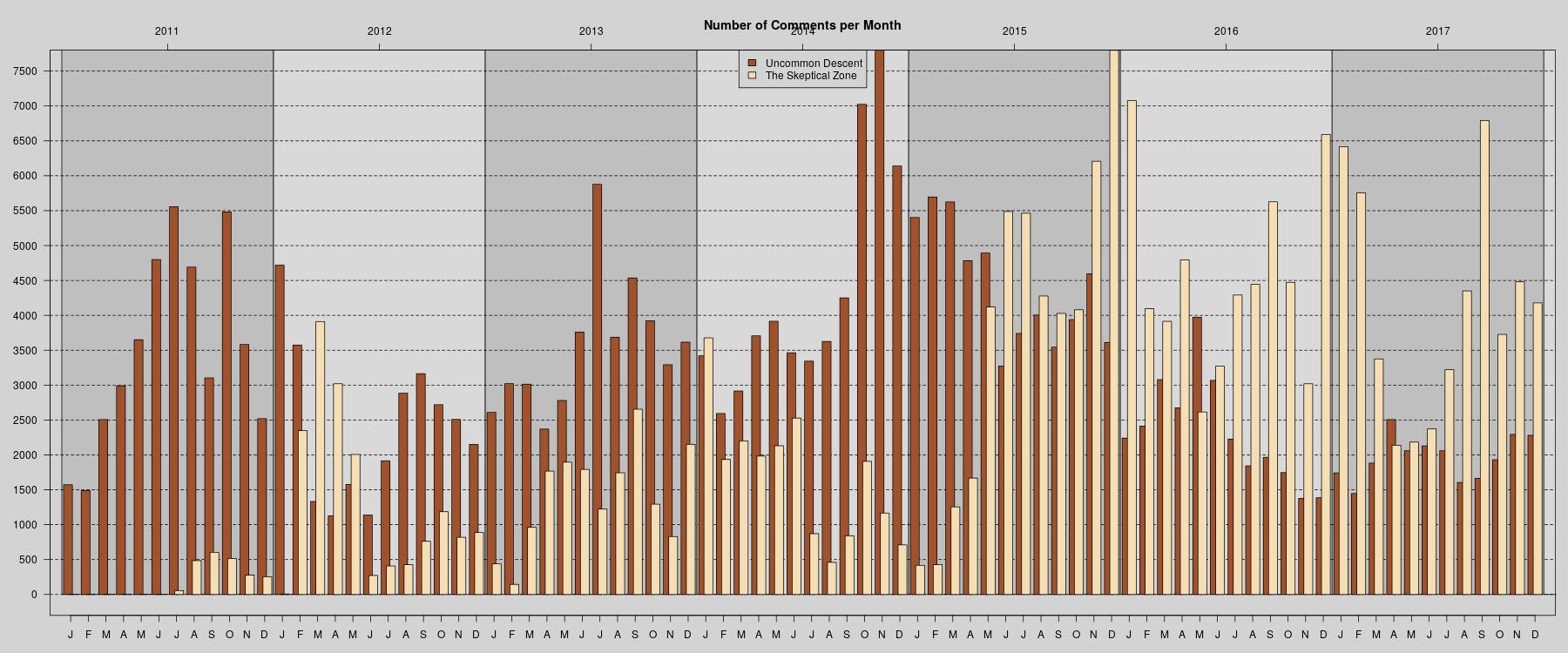
Here are some quantitative reflections on “Uncommon Descent” (UD) and “The Skeptical Zone” (TSZ) in 2017. I cannot stress enough the quantity bit, nothing is said about the quality of posts and comments.
Joe Felsenstein recently posted a rebuttal of a critique of Fisher’s fundamental theorem of natural selection (FTNS). The authors, Basener and Sanford, argue that if new mutation (missing from the original FTNS) is taken into account, the theorem shows that Darwinism is impossible rather than inevitable. I agree with each point of Joe’s rebuttal.
Yet, I think that no discussion of this topic is complete without explaining that Fisher’s view, and more generally the original Modern Synthesis, is inadequate precisely because of the rejection of mutation-limited dynamics.
What is The Skeptical Zone, William Basener and John Sanford? Why should you care?
The Skeptical Zone is where a couple of distinguished biologists, Joe Felsenstein and Michael Lynch, have dignified a recently published article of yours with a response. That is all you need to know. If they had responded on the back of a cereal box instead, providing you with a form to clip, then it would have behooved you to clip the form, fill it out, and send it, along with a self-addressed, stamped envelope, to their post office box in Battle Creek, Michigan.
Of course, I am dating myself — and also you. That is just the point. You ought to know that, even as the computer enables studies that were impossible when Ronald Fisher dubbed a not-so-fundamental result of his the Fundamental Theorem of Natural Selection, it enables interaction with domain experts in ways that were impossible in Fisher’s time. We are well into the 21st Century, and no one under the age of 50 will find credible any reason you might offer for declining to engage Joe in this forum. You can ignore all of the riff-raff, myself included, and interact with the scientist who happened, about the time that your paper addressing Fisher’s theorem was published, to address the theorem in the 37th Fisher Memorial Lecture (via video link, I might add).
The prospects for resolving some points, and arriving at a degree of agreement, are much better in a modern exchange of comments than in an old-fashioned exchange of essays. One aspect of The Skeptical Zone makes it particularly appealing in discussion of mathematical models: you can enter stuff like \LaTeX between two dollar signs, and cause readers to see stuff like It’s a miracle!
Given how little control we have of our wandering minds, how can we cultivate real mental autonomy?
He develops a metaphor of conscious thoughts as dolphins that leap from the water of unconscious processing into the air of conscious awareness, and asks:
The really interesting question then becomes: how do various thoughts and actions ‘surface’, and what’s the mechanism by which we corral them and make them our own? We ought to probe how our organism turns different sub-personal events into thoughts or states that appear to belong to ‘us’ as a whole, and how we can learn to control them more effectively and efficiently. This capacity creates what I call mental autonomy, and I believe it is the neglected ethical responsibility of government and society to help citizens cultivate it.
The blogs of creationists and advocates of ID have been abuzz lately about exciting new work by William Basener and John Sanford. In a peer-reviewed paper at Journal of Mathematical Biology, they have presented a mathematical model of mutation and natural selection in a haploid population, and they find in one realistic case that natural selection is unable to prevent the continual decline of fitness. This is presented as correcting R.A. Fisher’s 1930 “Fundamental Theorem of Natural Selection”, which they argue is the basis for all subsequent theory in population genetics. The blog postings on that will be found here, here, here, here, here, here, and here.
One of us (JF) has argued at The Skeptical Zone that they have misread the literature on population genetics. The theory of mutation and natural selection developed during the 1920s, was relatively fully developed before Fisher’s 1930 book. Fisher’s FTNS has been difficult to understand, and subsequent work has not depended on it. But that still leaves us with the issue of whether the B and S simulations show some startling behavior, with deleterious mutations seemingly unable to be prevented from continually rising in frequency. Let’s take a closer look at their simulations.
As some of you already know, or suspect, I have decided to “return” to publishing OPs at TSZ. There are many reasons for that but mainly to save TSZ from what many blogs like this one suffered; the inevitable death. So, let’s see and hope that my take on old ideas can help to revitalize TSZ again… I have new ideas too… Continue reading →
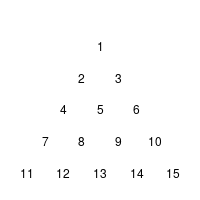
Yesterday, I looked again through “Introduction to Evolutionary Informatics”, when I spotted the Cracker Barrel puzzle in section 5.4.1.2 Endogenous information of the Cracker Barrel puzzle (p. 128). The rules of this variant of a triangular peg-solitaire are described in the text (or can be found at wikipedia’s article on the subject).
The humble authors1 then describe a simulation of the game to calculate how probable it is to solve the puzzle using moves at random: Continue reading →
This is not intended as a post about President Trump’s recently reported remarks about “s**thole countries,” but about what a Catholic cardinal, Timothy Dolan, said in response to those remarks. The Cardinal tweeted that Martin Luther King Jr., were he alive today, would remind people that “no country is a ‘hole,’ no person unworthy of respect.” In this post, I’d like to explain why I think the Cardinal is perfectly right on the second point and absolutely wrong on the first. I’m also going to try to define a “hole,” and make a tentative list of countries which I think would qualify, at the present time. Readers are welcome to disagree, of course.
Dr Elizabeth Liddle conceived, created and grew this website to the success it is today. It was a new idea. Many other sites can be found where a particular worldview is being promoted or a particular sphere of interest draws people of like interest. TSZ was intended to address the problem that Lizzie saw first-hand at other sites I and many others watched her participate in. Her being turfed from one well-known ID blog was partly the catalyst to trigger this venture. Continue reading →
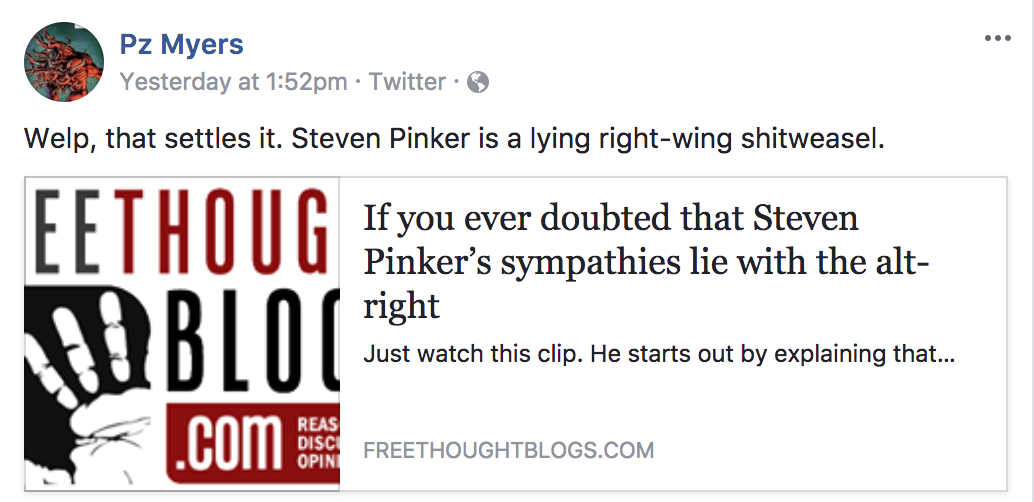
Via a post by Jerry Coyne, I learned of an egregious smear by PZ Myers of Steven Pinker. PZ posted the following on his Facebook page:
He is referring to the following remarks by Pinker. Watch this clip — the entire clip — and ask yourself, as I did: How could any honest and rational person view this and then paint Pinker as “a lying right-wing shitweasel”?
What the hell has happened to PZ over the years? Wasn’t he rational at one point?
why is there so much disagreement in origin subjects when they are claimed to be based on scientific methodology? Who is messing up here in making/rejecting conclusions where othewise science subjects never have such contentions.?
I suggest and conclude that this is because origin subjects are about invisible processes and events. it’s not intellectual failure of one side or the other in presenting or understanding positions.
In fact like religious ideas, or physics, or even atomic levels of biology, like germs etc etc EVERYTHING investigated is not clear to the human eye. germ theory was rejected well into the 19th century because they couldn’t see the germs. physics gain its prestige as more complicated because it was about invisible forces. So proving how these forces existed and worked was lauded as a brilliance above visible discoveries. Continue reading →
NOTE: Some readers have asked me for a transcript of Dr. Lydia McGrew’s webinar. Good news: I have now completed the transcript (see below). Additionally, the points Dr. McGrew raised in her talk can be found here. In her talk, Dr. McGrew was responding to an e-interview given by Dr. Michael Licona, a leading Christian apologist for the Resurrection, who is an Associate Professor of theology at Houston Baptist University, and who is also the author of Why Are There Differences in the Gospels?: What We Can Learn from Ancient Biography (Oxford University Press, 2017). In his book, Dr. Licona defended the historicity of the Gospels but endorsed the view, common among New Testament scholars, that the authors of the Gospels would have considered it perfectly legitimate to deliberately alter historical details of events, relating non-factual claims as if they were factual, because back in those days, writers of biographies were more concerned with Truth than with mere facts. Dr. McGrew is a conservative Christian writer, but not a Biblical inerrantist. Nevertheless, she felt that by acknowledging the existence of what she terms “fictionalizing compositional devices” in the Gospels, Dr. Licona had conceded too much to skeptics such as Bart Ehrman (whom Licona debated on the reliability of the New Testament back in 2016), and that such a concession undermined his whole case for the historicity of the Resurrection. For this reason, Dr. Grew decided to respond to Dr. Licona by presenting the webinar shown below.
Dr. Lydia McGrew’s webinar is titled, “Six Bad Habits of New Testament Scholars and How to Avoid Them.” Her host for the webinar was Jonathan McLatchie, an Intelligent Design proponent who is currently a Ph.D. student in cell biology and a contributor to various apologetics websites, as well as being the founder of the Apologetics Academy. I’m happy to report that Dr. Lydia McGrew’s Webinar is now available on Youtube. I commend it to viewers, and I can promise you it’s a very thought-provoking presentation, whatever your theological perspective may be. Comments are welcome from people of all faiths and none.
For the benefit of those readers who don’t know her, Dr. Lydia McGrew has a Ph.D. in English from Vanderbilt University (1995), but nearly all of her published work has been in analytic philosophy, with specialties in epistemology and probability theory. Her curriculum vitae is here. Dr. McGrew is also a home schooling mother living in the Midwest, who is married to the philosopher, Dr. Timothy McGrew, Chair and Professor of the Department of Philosophy at Western Michigan University (C.V. here).
UPDATE: I’ve now transcribed the whole of Dr. McGrew’s talk, which can be viewed below. I invite readers to peruse it at their leisure. Comments are welcome.
The blogs of creationists and ID advocates have been buzzing with the news that a new paper by William Basener and John Sanford, in Journal of Mathematical Biology, shows that natural selection will not lead to the increase of fitness. Some of the blog reports will be found here, here, here, here, here, and here. Sal Cordova has been quoting the paper at length in a comment here.
Basener and Sanford argue that the Fundamental Theorem of Natural Selection, put forward by R.A. Fisher in his book The Genetical Theory of Natural Selection in 1930, was the main foundation of the Modern Evolutionary Synthesis of the 1930s and 1940s. And that when mutation is added to the evolutionary forces modeled by that theorem, it can be shown that fitnesses typically decline rather than increase. They argue that Fisher expected increase of fitness to be typical (they call this Fisher’s Theorem”).
I’m going to argue here that this is a wrong reading of the history of theoretical population genetics and of the history of the Modern Synthesis. In a separate post, in a few days at Panda’s Thumb, I will argue that Basener and Sanford’s computer simulation has a fatal flaw that makes its behavior quite atypical of evolutionary processes.
As my handle indicates, I prefer to lurk. The novelty of being told that I don’t exist overcame my good sense, so I joined the conversation.
For the record, I am what is called a weak atheist or negative atheist. The Wikipedia page describes my position reasonably well:
“Negative atheism, also called weak atheism and soft atheism, is any type of atheism where a person does not believe in the existence of any deities but does not explicitly assert that there are none. Positive atheism, also called strong atheism and hard atheism, is the form of atheism that additionally asserts that no deities exist.”
I do exist, so fifthmonarchyman’s claims are disproved. For some reason he doesn’t agree, hence this thread.
Added In Edit by Alan Fox 16.48 CET 11th January, 2018
This thread is designated as an extension of Noyau. This means only basic rules apply. The “good faith” rule, the “accusations of dishonesty” rule do not apply in this thread.
Congratulations to our resident theoretical biologist of high renown, Joe Felsenstein, on his presentation, yesterday, of the 37th Fisher Memorial Lecture. [ETA: I’ll post a separate announcement of the video, when it is released.] Following are the details provided by the Fisher Memorial Trust (with a link added by me).
Title: Is there a more fundamental theorem of natural selection?
Abstract. R.A. Fisher’s Fundamental Theorem of Natural Selection has intrigued evolutionary biologists, who wondered whether it could be the basis of a general maximum principle for mean fitness of the population. Subsequent work by Warren Ewens, Anthony Edwards, and George Price showed that a reasonable version of the FTNS is true, but only if the quantity being increased by natural selection is not the mean fitness of the population but a more indirectly defined quantity. That leaves us in an unsatisfactory state. In spite of Fisher’s assertion that the theorem “hold[s] the supreme position among the biological sciences”, the Fundamental Theorem is, alas, not-so-fundamental. There is also the problem that the additive genetic variances involved do not change in an easily predictable way. Nevertheless, the FTNS is an early, and imaginative, attempt at formulating macro-scale laws from population-genetic principles. I will not attempt to revive the FTNS, but instead am trying to extend a 1978 model of mine, put forth in what may be my least-cited paper. This attempts to make a “toy” model of an evolving population in which we can bookkeep energy flows through an evolving population, and derive a long-term prediction for change of the energy content of the system. It may be possible to connect these predictions to the rate of increase of the adaptive information (the “specified information”) embodied in the genetic information in the organisms. The models are somewhat absurdly oversimple, but I argue that models like this at least can give us some results, which decades of more handwavy papers on the general connection between evolution, entropy, and information have not.


 It’s a miracle!