Are Social Justice Warriors denying science? Is either Sex or Gender fluid?

Consider a heresy which contradicts the Gleischshaltung of Political Correctness: Gender is NOT a social construct, and both Gender and Sex are in fact binary.

How is this possible? Some sceptics suggest that both gender and sex are determined by chromosome status: Males are XY and females are XX. End of story.

The truth is not so simple. From my understanding of Biology: the default setting for embryonic development is female. Female fetuses can become male if two events occur:

1 – The activation of the SRY gene (controlling events such as differentiation of gonads into testes/ovaries)

2 – Testosterone Receptors bind to appropriate levels of Bio-available testosterone in utero.

So far, we have described a Binary situation:

Where can Biochemistry proceed differently? (I do not imply that “pathology” occurs anywhere during this discourse) Continue reading

Moderation Issues (6)

Image

Please use this thread for (and only for) alerting admins to moderation issues and for raising complaints arising from particular decisions. We remind participants that TSZ is a benign dictatorship, the property of Dr. Elizabeth Liddle. All decisions regarding policy and implementation are hers alone.

Why consciousness must be electric

Nested hierarchies have been discussed adequately, one should think. So here is an alternative matter.

I would propose that consciousness must be electrical in nature, due to two crucial facts:

1. The information that becomes conscious is some of the information being carried by the action-potentials of the nerve cells. It is not any other kind of information, such as quantum states of molecules, it is simply the information that nerve cells are known to carry via action-potentials.

2. Electric fields are the only physical phenomenon in the brain that have both the ability to extend in space significantly beyond nerve conduction itself and to be able to change and interact exceedingly swiftly, just as we experience conscious changes occurring “instantly.”

There are many other issues involved, of course, however, the fact remains that the physical phenomena underlying consciousness must be able to account for how consciousness appears to have the kind of extension and interactivity that creates consciousness, as electric fields would seem to be able to do. And that physical phenomenon must be tied to the information being carried as nerve impulses, as the electric fields of the nervous system ineluctibly are.

There does not seem to be a realistic option of a different sort of phenomenon that can unify that information encoded in the nerves into a conscious whole, and to do so exceedingly swiftly and surely. Certainly quantum physics offers nothing beyond electric fields interacting that could magically account for consciousness, no matter how much hocus-pocus people try to coax out of quantum phenomena. In the end it can’t be strange loops or the “illusion of consciousness” either, as one has to explain the difference between the consciousness and the unconscious (I would propose that the amount of, and type of, interaction of electric fields is what is crucial).

A great many issues could be discussed, however it seems to me that beginning with the basics is appropriate. There really is only one good candidate for consciousness in the physics of the brain at all, which is the electric fields that are unquestionably a necessary part of nerve conduction in the first place. If consciousness simply is what it is to be like a highly structured and unified (always becoming unified) electric field from the inside, so to speak, then it is the one phenomenon that we know not just abstractly, but as reality itself.


Phylogenetic Systematics

Let’s have a serious discussion about phylogenetic systematics.

What are the assumptions, the methods, and the inferences that can be drawn from phylogenetic analysis.

For example, is there anything to the creationist claim that phylogenetic systematics assumes common ancestry and does it even matter?

I’ll be using a number of different references such as Molecular Evolution: A Phylogenetic Approach and Molecular Evolution and Phylogenetics.

This thread will not be password protected, but it will be protected by angels.

The Half-Truth of Darwinism, a Personal Opinion

Darwinism is incomplete because it only takes account of matter and ignores spirit.

Evolution is a process of matter ascending and spirit descending. It is a process whereby physical substance goes through process that prepares it to accommodate the descending spirit. The continuity of living matter is sustained by hereditary and it takes on various forms due to adaptive radiation. But these forces come from the earth and they tie organisms to the environment and lead only to specialization. They take organisms down ever narrowing paths. The fossil record is a tableau of forms that are frozen in their specializations, evolutionary dead ends. These earthly forces radiate from the centre.

The spiritual forces work in the opposite direction drawing the living substance outwards, emancipating it from the earthly forces. Through these forces organisms separate out from the earth as a plant grows towards the sun. Emancipation is evident in such things as inner temperature control, freeing of the upper limbs to perform creative functions rather than them being used for locomotion or support and taking responsibility for care of offspring.

It is only in the human form that the self-conscious ego can occupy physical substance as a material individual. This is the place on earth where matter and spirit meet. In as much as each of us know ourselves, we know the spirit within. And this is only possible because our form has been prepared in such a way that it can accommodate our ego, the spirit within.

Lysenko Returns

The Soviet Era’s Deadliest Scientist Is Regaining Popularity in Russia
Trofim Lysenko’s spurious research prolonged famines that killed millions. So why is a fringe movement praising his legacy?

Wheat, rye, potatoes, beets—most everything grown according to Lysenko’s methods died or rotted, says Hungry Ghosts. Stalin still deserves the bulk of the blame for the famines, which killed at least 7 million people, but Lysenko’s practices prolonged and exacerbated the food shortages. (Deaths from the famines peaked around 1932 to 1933, but four years later, after a 163-fold increase in farmland cultivated using Lysenko’s methods, food production was actually lower than before.) The Soviet Union’s allies suffered under Lysenkoism, too. Communist China adopted his methods in the late 1950s and endured even bigger famines. Peasants were reduced to eating tree bark and bird droppings and the occasional family member. At least 30 million died of starvation.

Lysenko’s grip on power began to weaken after Stalin died in 1953. By 1964, he’d been deposed as the dictator of Soviet biology, and he died in 1976 without regaining any influence. His portrait did continue to hang in some institutes through the Gorbachev years, but by the 1990s, the country had finally put the horror and shame of Lysenkoism behind it.

Until recently. As the new Current Biology article explains, Lysenko has enjoyed a renaissance in Russia over the past few years. Several books and papers praising his legacy have appeared, bolstered by what the article calls “a quirky coalition of Russian right-wingers, Stalinists, a few qualified scientists, and even the Orthodox Church.”

There are several reasons for this renewal. For one, the hot new field of epigenetics has made Lysenko-like ideas fashionable. Most living things have thousands of genes, but not all those genes are active at once. Some get turned on or off inside cells, or have their volumes turned up or down. The study of these changes in “gene expression” is called epigenetics. And it just so happens that environmental cues are often what turn genes on or off. In certain cases, these environmentally driven changes can even pass from parent to child—just like Lysenko claimed.

https://www.theatlantic.com/science/archive/2017/12/trofim-lysenko-soviet-union-russia/548786/

What’s wrong with this paper?

Taking a new tack with the common descent/common design theme, I’d like to sneak up on it. As Sal Cordova likes to do, I offer a hypothesis for critique. Here’s an old phyogenetic analysis of mine. Does it show common descent? If not, what’s wrong with it?

Harshman J., Huddleston C.J., Bollback J., Parsons T.M., Braun M.J. True and false gharials: A nuclear gene phylogeny of Crocodylia. Systematic Biology 2003;  52:386-402.

This one is about crocodiles. Are crocodiles all the same kind? How do you know? If they aren’t how many kinds are there within the group and how do you know? If they are, are they a whole kind or just part of a larger kind? And if the latter, what is the larger kind?

Craniopagus twins revisited: A response to Professor Egnor

Professor Michael Egnor has kindly responded to my post, The craniopagus twins from British Columbia: A test case for Thomistic dualism (TSZ, November 25, 2017), in a new post, titled, The Craniopagus Twins and Thomistic Dualism (ENV, December 10, 2017). In my earlier post, I had argued that “the twins’ ability to share thoughts without speaking weakens the case for Thomistic dualism, and lends support to a subtle variety of materialism which incorporates top-down causation.” In his response, Professor Michael Egnor gets to the heart of our disagreement and explains why he does not think that the experiment I proposed would serve to test whether dualism or materialism is true. Egnor proposes another test of his own, relating to mathematical abilities. In this post, I’d like to explain why I object to Professor Egnor’s test, before putting forward another one, very similar to it, which I believe could experimentally resolve whether dualism or materialism is true. Finally, I offer a few reflections on the philosophical argument which, Egnor contends, makes materialism logically untenable.

Continue reading

At last, an intelligent solution to the problem of global warming

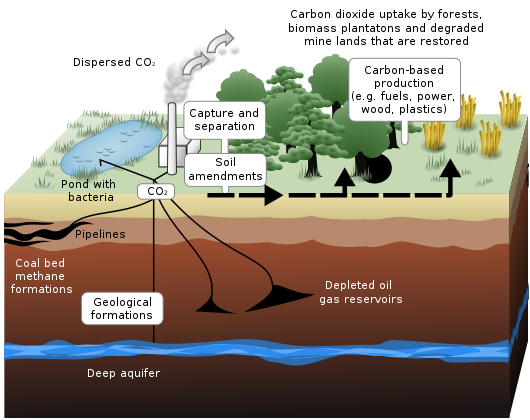
Sequestration of carbon dioxide emissions from a thermal power plant

I’d like to draw readers’ attention to an excellent article in Quartz magazine (December 4, 2017) by Akshat Rathi, titled, Humanity’s fight against climate change is failing. One technology can change that. Dr. Rathi has a Ph.D. in chemistry from Oxford, and his article is based on lengthy conversations with more than 100 academics, entrepreneurs, policy experts, and government officials.

Continue reading

The Fine-Tuning Argument – Kettle Logic on a Cosmological Scale

As a relatively recent arrival here at TSZ, I am somewhat intrigued to still see the Fine-Tuning Argument in regular rotation.  It appears often in comments, but the two most recent OP’s that I have come across dedicated to the topic are Mung’s ‘The Wonder of Water‘ and RobC’s ‘The Big Numbers Game‘.

That I find the Fine-Tuning Argument completely unconvincing will not come as a surprise to anyone who has read any of my comments on TSZ.  But I think it is worth taking a moment to explain why that is as my reasoning differs slightly from that of others whose comments I have seen.  In a comment on the ‘Wonder of Water’ thread, Joe Felsenstein comes closest while referring to the ability of the Schrodinger Wave Equation to model all of the properties that we see expressed in Chemistry:

“If Michael Denton’s Intelligent Designer wants to fine-tune properties of water she has to do it by tinkering with the SWE. Which would mess up a lot else.”

Continue reading

Two-million-year-old Adam and Eve still possible: Dr. Ann Gauger’s model remains viable

A few weeks ago, I wrote a short post titled, Adam and Eve still a possibility?, in which I drew readers’ attention to the work of geneticist Richard Buggs, Reader in Evolutionary Genomics at Queen Mary University of London, who thinks it’s still theoretically possible that the human race once passed through a short, sharp population bottleneck of just two individuals, followed by exponential population growth. Biologist Dennis Venema, professor of biology at Trinity Western University in Langley, British Columbia, has recently written a two-part reply to Buggs, titled, Adam, Eve and Population Genetics: A Reply to Dr. Richard Buggs (Part 1) and A Reply to Dr. Richard Buggs (Part 2). But in a comment in response to a query of mine, Professor Venema conceded that at the present time, science cannot rule out Dr. Ann Gauger’s hypothesis that there was a severe bottleneck around two million years ago, with the emergence of Homo erectus, whom she identifies as the first true human being. When I pressed Professor Venema, saying, “In plain English, what you’re saying is that science can’t rule out an original couple, if they lived more than 1 million years ago,” he replied:

I guess it depends on how reliable you think PSMC methods are as they approach this time frame. The data looks smooth to me out to around 1.5 MYA or so, plus or minus, but the method loses its power as you go back further and further.

Continue reading

Naturalism Without Mechanism

As there is occasional interest in the relation between science and metaphysics here, I thought I’d share this article: “Metaphysics of Metamorphosis“, by the philosopher of science John Dupre. Dupre argues that metaphysics that takes science seriously — what he calls “naturalistic metaphysics” — will give us a very different picture of reality than what we get from traditional a priori metaphysics:

This project of science-based metaphysics, sometimes referred to as ‘naturalistic metaphysics’, has been surprisingly controversial. The philosophers James Ladyman at the University of Bristol and Don Ross at the University of Cape Town offered a forceful defence in their book Every Thing Must Go (2007). As that book illustrates, the debate can be technical and vitriolic. Consequently, I won’t defend naturalistic metaphysics from its critics so much as show you how it helps us inch towards an answer to one of the oldest chestnuts in the history of philosophy: is reality made up of things that somehow change over time, or are things just temporary shapes that our perception plucks out from a flux of unruly, unfolding processes?

Continue reading

The craniopagus twins from British Columbia: A test case for Thomistic dualism

The story of Krista and Tatiana Hogan, 11-year-old twin girls born in Vancouver, British Columbia, who are joined at the top, back, and sides of their heads, will doubtless be familiar to most readers. Here’s a documentary that was made about the twins:

https://youtu.be/WKwT1Ol3nY0

Over at Uncommon Descent and Evolution News and Views, Denyse O’Leary, David Klinghoffer and Michael Egnor (who is a Professor of Neurosurgery at State University of New York, Stony Brook), have argued that the Hogan twins constitute a living refutation of the materialistic notion that mind and brain are one and the same thing. Each twin has her own distinct mind and personality, despite the fact that they share parts of their brains.

In this post, I’m going to argue that while these three authors are perfectly correct in insisting that each twin does indeed possess a mind of her own, their claim that this fact refutes materialism is profoundly mistaken. On the contrary, I will argue that the twins’ ability to share thoughts without speaking weakens the case for Thomistic dualism, and lends support to a subtle variety of materialism which incorporates top-down causation. And on this point, the mother of the Hogan twins would probably agree with me: she sends her children to a school run by the Seventh-day Adventist Church, which teaches that the human brain is the seat of thought, language, creativity, morality and even our consciousness of God. Could this Christian version of materialism be correct, after all?

Continue reading

Defining Fitness

There is a pretty interesting discussion going on in Noyau regarding the many definitions of “fitness” in evolutionary biology. It would be a shame for it to be lost in that particular venue here at TSZ. At the risk of being censored by the admins for posting too many OPs in one month I thought I’d start this thread.

Here’s my take so far:

Allan Miller was charged by phoodoo with resorting to different definitions of fitness. Allan denied the charge and when asked for a definition of fitness Allan provided one. Allan later stated that his definition only properly applied to asexual species.

Others chimed in to say that the definition of fitness depends on the context, which hardly seems to contradict what phoodoo was saying.

My own position is that fitness has its definition within a particular mathematical framework. My position is also that fitness can be defined generically but that such a definition is tautological. Special definitions of fitness are required to make the concept testable.

Here’s hoping we can move the discussion about fitness out of Noyau.

Not-so-intelligent design

Much of the popular debate about evolution is between neo-Darwinians and neo-Paleyans (advocates of “intelligent design”). If you ask a neo-Paleyan who the intelligent designer is, they typically say they believe “God”, but there are other possible answers, for example, “extraterrestrials”, which begs the question “Who designed extraterrestrials?”, although I will ignore it. Continue reading