The “Soul”

There’s a lot of (mostly very obscure) talk about “the soul” here and elsewhere. (Is it supposed to be different from you, your “mind,” your “ego” etc.? Is it some combo of [some of] them, or what?)  A friend recently passed along the following quote from psychologist James Hillman that I thought was nice–and maybe demystifying–at least a little bit. Continue reading

Ideological Turing Tests

Following up on my last post I’d like to suggest another video from Leah Libresco that perhaps should be required viewing here.

Not only is it relevant to every conversation we have here but it is related to Turing Tests something that I find fascinating and important for “my Game” if I ever get around to it.


Here is a link for the corresponding Ideological Turing Test

http://www.patheos.com/blogs/unequallyyoked/ideological-turing-test-contest

What do you think? Should we come up with some questions surrounding Intelligent Design?

peace

Coyne vs. Shermer vs. Wood on the silliness of skepticism

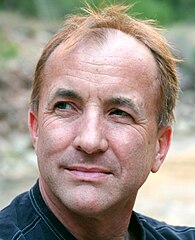
I recently viewed Dr. David Wood’s video, Scooby-doo and the Case of the Silly Skeptic. The target of Wood’s criticism was Dr. Michael Shermer (pictured above), who defended a principle which he referred to as “Shermer’s Last Law,” in the course of a debate with Wood on October 10, 2016. According to this law, any sufficiently advanced extraterrestrial intelligence is indistinguishable from God. The reason is that technologically advanced aliens could easily produce effects that would look like miracles to us. As Wood puts it (paraphrasing Shermer’s argument): “They might be able to cure diseases instantly, or regenerate limbs, or change the weather. These kinds of things would seem miraculous to human beings, and so from our perspective, aliens who could do these kinds of things would be indistinguishable from God.” So if we saw something miraculous, how would be know that it’s God and not aliens?

In the debate, Wood fired back at Shermer, asking: “If you did want to know that God exists, wouldn’t you want some method to figure out if He exists, something that would lead you to the truth about that? According to Dr. Shermer, there can be no such method, because [for] anything God could possibly do, you could say, ‘Aliens did it.’ … So it’s built into the methodology that you could never know whether God exists or not. If it’s built into your methodology [that you can] never know the truth about something, then I have to question the methodology.” In his video, Dr. Wood added: “If somebody says to me, ‘Prove to me that statement X is true,’ but an examination of his methodology shows that he won’t allow anything to count as evidence that statement X is true, how can we take that demand for proof seriously?” Finally, Wood administered his coup de grace against those who demand proof of God’s existence: “When I use an atheist’s methodology against him, he can’t even prove his own existence,” since advanced aliens could make me believe that I am arguing with an atheist when in fact I’m not, simply by messing with my brain.

Wood also attacked Shermer’s hypocrisy for asking why God doesn’t detect amputees: even if He did, Shermer still wouldn’t be convinced of God’s existence. And how reasonable is it, asks Wood, for Shermer to believe the evolutionary naturalist myth that life originated from non-living matter, while at the same time insisting that the regeneration of a limb from living matter would somehow constitute proof of God’s existence?

Is Shermer simply being willfully perverse, as Wood seems to believe? Much as I profoundly disagree with Shermer, I would argue that his position is at least intellectually consistent, even if I also consider it to be unreasonable. Here’s why.

Continue reading

Evolution’s Puzzle & Trans-Evolutionary Change

In lead-up to the recent Royal Society’s “New Trends in Evolutionary Biology: Biological, Philosophical and Social Sciences Perspectives” meeting in London, which courted the terms ‘extension,’ ‘replacement’ and ‘amendment’ in regard to the (neo-)Darwinian evolutionary ‘Modern Synthesis’ in biology, as presented by active and leading members of the (mainly Anglo-American) biological scientific community as well as philosophers (and a couple of largely physical rather than cultural anthropologists), including several members of The Third Way of Evolution, this was one of a few trans-evolutionary change preparations aimed at liberating the social sciences and humanities from positivist, reductionist, evolutionist, atomist & naturalist (PREAN) ideologies (none of which, of course, refers to a single soul at TSZ because almost everyone here is – by definition of being a ‘skeptic’ – skeptical about even their own admittedly personal ideologies that are often so easily identifiable by their words made in public?), which display hegemonic tendencies by capital-capture political positioning scholars & dehumanising ‘public understanding’ gurus coming from oftentimes highly specialised natural-physical sciences fields that have become an unfortunate burden in collaborative science, philosophy and theology/worldview discourse, to everyone.

Cheers to moving beyond (neo-)Darwinian evolutionism with trans-evolutionary li-ber-a-tion!

Lightning rods and the Church: John Loftus resurrects a hoary old myth

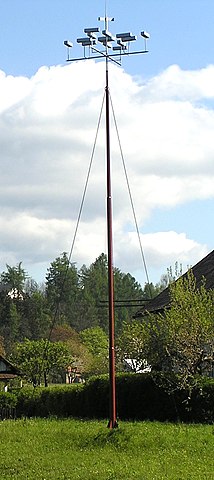
The lightning rod invented by the Czechoslovakian priest Prokop Divis in 1754. Image courtesy of Bohemianroots (author) and Wikipedia.

Well, it looks like atheist John Loftus, author of Why I Became an Atheist and Unapologetic: Why Philosophy of Religion Must End, is at it again. In a recent blog post, titled, DC Regular Mattapult On Church Lightning Rods (October 30, 2016), he resurrects the “Warfare” thesis propagated by Andrew Dickson White, and accuses Christian clergymen of obstructing the installation of lightning rods on churches in the eighteenth century. Loftus writes:

How bad was the problem of lightning striking churches?

“For centuries, the devastating scourge of lightning had generally been considered a supernatural phenomenon or expression of God’s will. At the approach of a storm, church bells were rung to ward off the bolts. “The tones of the consecrated metal repel the demon and avert storm and lightning,” declared St. Thomas Aquinas. But even the most religiously faithful were likely to have noticed this was not very effective. During one thirty-five-year period in Germany alone during the mid-1700s, 386 churches were struck and more than one hundred bell ringers killed. In Venice, some three thousand people were killed when tons of gunpowder stored in a church was hit.”

Franklin’s results are well known: he discovered that the electricity could be directed to a lightning rod which would save the building from being burned down. Most were delighted to find protection from this disaster, but not everybody:

“In some circles, especially religious ones, Franklin’s findings stirred controversy. The Abbé Nollet, jealous, continued to denigrate his ideas and claimed that the lightning rod was an offense to God. “He speaks as if he thought it presumption in man to propose guarding himself against the thunders of Heaven!” Franklin wrote a friend. “Surely the thunder of Heaven is no more supernatural than the rain, hail or sunshine of Heaven, against the inconvenience of which we guard by roofs and shades without scruple.”

…..

Excerpts From: Isaacson, Walter. “Benjamin Franklin.” Simon & Schuster Paperbacks. iBooks.
This material may be protected by copyright.

Is Loftus telling the truth?
Continue reading

According to Michael Skinner; Darwin’s theory that natural selection drives evolution is incomplete without input from evolution’s anti-hero: Lamarck… Really now?!

Let’s just call this my random act of mischief for the day!                   😉

Michael Skinner, professor of biological science at Washington State University just came out with the following in the popular press:

Unified theory of evolution Darwin’s theory that natural selection drives evolution is incomplete without input from evolution’s anti-hero: Lamarck

Is it indeed time to revise the theory of evolution?  Or… Is Skinner in error and invoking a common misconceived textbook caricature of Lamarck?  IMHO: Short answers = NO! & YES!

I urge any and all to read Mark Ptashne’s insights before weighing in the discussion.

Bottom Line: Nucleosome modifications may be necessary for epigenetic responses, but they are not sufficient.

To quote PZ Myers, who cuts to the chase:

We say epigenetics is really important in development and in physiological adaptation — it’s good to know more about it, and is essential for understanding the state of the organism. But evolution? Meh. Acquiring the process of semi-permanently modifying the cell state is something that was a key innovation (OK, many innovations) in EVOLUTION [emphasis mine], but it’s been overhyped as an information transfer process on evolutionary timescales…

So who got the epigenetics story right? PZ Myers & Mark Ptashne?… or Michael Skinner?…

True or false? Log-improbability is Shannon information

True or false? If p is the probability of an event, then the Shannon information of the event is -\!\log_2 p bits.

I’m quite interested in knowing what you believe, and why you believe it, even if you cannot justify your belief formally.

Formal version. Let (\Omega, 2^\Omega, P) be a discrete probability space with P(\Omega) = 1, and let event E be an arbitrary subset of \Omega. Is it the case that in Shannon’s mathematical theory of communication, the self-information of the event is equal to -\!\log_2 P(E) bits?

Dice Entropy – A Programming Challenge

Given the importance of information theory to some intelligent design arguments I thought it might be nice to have a toolkit of some basic functions related to the sorts of calculations associated with information theory, regardless of which side of the debate one is on.

What would those functions consist of?

Continue reading

Competing Origin of Life Hypotheses – Fantastic Summary by the BBC

This article by Michael Marshall on the The Secret of How Life on Earth Began is probably the best summary on the topic I have read to date. I compiled a quick glossary below.

It’s not just about the “smoker” vs “souper” debate (sometimes referred to as the Metabolism First vs RNA World Brouhaha).  This article also examines other disparate competing hypotheses regarding the origin of life and even suggests that a unifying grand hypothesis may be possible.

A great read!

oparin haldane charles darwin atp tree of life chemiosmosis rna world franklin hershey chase peter mitchell cyanide nick lane alkaline vents hydrothermal vents clay meteorites geothermal pond volcanic pond ultraviolet compartmentalisation first lipid world genetics first montmorillonite citrate magnesium copper lipid precursors hodge podge world metal ion core deborah kelley lost city william martin luca last universal common ancestor origin of life reactor pier luigi luisi glycol nucleic acid günter wächtershäuser jack corliss michael russell pyrite david bartel philipp holliger gerald joyce peter nielsen polyamide nucleic acid pna albert eschenmoser threose nucleic acid tna eric meggers miller urey watson crick orgel john sutherland thomas cech walter gilbert thomas steitz jack szostak ribozyme rna enzymes ring of life vitalism trofim lysenko alexander oparin j. b. s. haldane armen mulkidjanian jillian f. banfield friedrich wöhler benjamin moore biotic energy warm little pond

Creationism in Texas Could Go Extinct on Election Day

An interesting article by Zack Koplin on creationism in Texas caught my eye on my Yahoo news feed. Setting aside the fact that I had no idea it was legal to teach creationism in Texas, I was equally surprised to discover the workings to remove such behind the scenes:

http://www.thedailybeast.com/articles/2016/10/31/creationism-in-texas-could-go-extinct-on-election-day.html


Baraminology of the Flood

Baraminology and the Flood

Presented for your amusement as a relief from all the very deep philosophy: a fine example of the cargo cult science of young-earth creationist baraminology. That label “cargo cult science” refers to attempts to ape the surface features of science, perhaps in hopes of gaining a similar degree of prestige. Think of Ann Gauger in a white lab coat, standing in front of a green screen.

Our example today comes from Kurt Wise, perhaps the most famous of the scientifically trained creationists — Harvard degree in paleontology with no less an advisor than S. J. Gould. Specifically, this publication:

Wise, Kurt P. 2009. Mammal kinds: How many were on the ark? Pages 129-161 in T. C. Wood and P. A. Garner (eds.), Genesis kinds: Creationism and the origin of species, Issues in creation #5. Wipf & Stock, Eugene, OR.

As we shall see, one of the attributes of cargo cult science is the very careful handling of assumptions; their implications must be considered only in so far as they contribute to the desired conclusion, and any inconvenient consequences must be ignored. Wise actually does better than most, and is willing to let the data take him farther than most, but not so far as to endanger his beliefs.

The central task of baraminology, and the one that has most interested me, is the attempt to identify the created kinds. Wise proposes a novel method for this using the fossil record. But first, some assumptions, which must be granted for the sake of argument.

We must first suppose the literal truth of the entire Genesis story, including a strict timeline. Life, including all the kinds, was created over a week about 6000 years ago. These various kinds contained the potential to develop — one should not say “evolve: — into a great many species very quickly, which they proceeded to do. Around 1500 years later, there was a great Flood that covered the world, killing all terrestrial animals (at least) other than those preserved by Noah on the Ark. And Noah carried a few individuals of one species of each created kind; thus each kind suffered a severe bottleneck in the Flood: not only was each species reduced to a few individuals, but each kind was reduced to a single species.

Directly after the flood, the kinds re-diversified into new species (or quickly went extinct, in many cases). Traditionally in baraminology, the kind has been roughly identified with the family, thus the cat kind is considered to include lions, cheetahs, domestic cats, etc., 30+ living species and a fair number of extinct ones, all from an original pair of cats on the Ark. (Wise is willing to go much further than that, as we will see.)

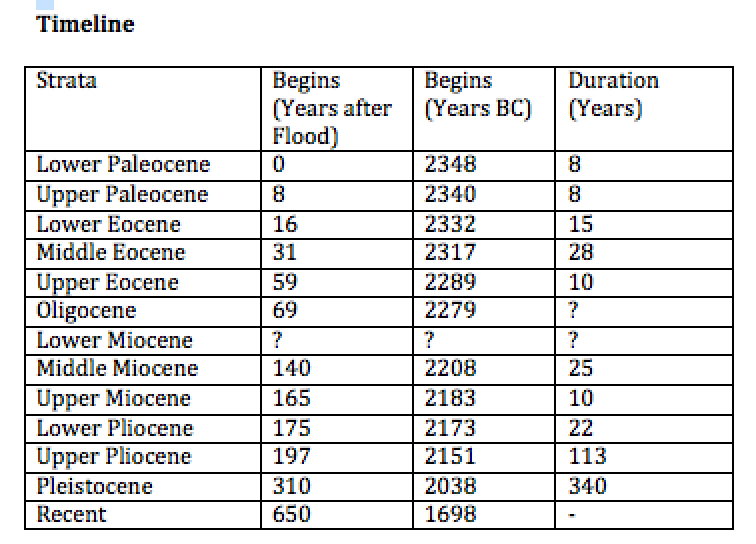
There are also a number of assumptions about the stratigraphic record. The record can be divided in two: Deposits of the Flood, including the entire Paleozoic and Mesozoic and unspecified portions of the Precambrian, and deposits of the post-Flood, the Cenozoic. The K-T boundary represents the end of the Flood. Within these strictures, Wise accepts the worldwide correlation and sequence of rocks. It just all happened a lot faster than mainstream geologists think. And here’s the timeline, a combination of Wise and other papers in the same volume. Deposition gradually decreases in rate as time goes by, slowing to roughly modern rates around 650 years after the Flood, and the entire Tertiary is compressed into that time.
screen-shot-2016-10-28-at-12-06-01-pm

Wise’s final assumption is that the fossil record is very close to complete, at least at the level of mammal kinds.

And here we arrive at a test for kind status. As soon as a kind gets off the Ark and has had time to increase to a reasonable level of population, it should be represented in the fossil record. Wise figures that 30 years or so should be enough time, so that every kind should be represented in the fossil record by the end of the Lower Eocene. Taking a standard classification of mammals, he assigns kind status as the lowest taxonomic level having any representative by the end of the Lower Eocene.

This results in some interesting developments. The approximate level of the kind is not the traditional family but superfamily and suborder. For example, Wise considers Feliformia and Caniformia to be single kinds. The former includes cats, mongooses, civets, and hyenas, while the latter includes dogs, bears, weasels, raccoons, and, most interestingly, seals. By similar reasoning, he also supposes that whales are descended from terrestrial mammals aboard the Ark. This is much more evolution — sorry, diversification — than most creationists are willing to swallow. Wise, to his credit, doesn’t shy away from that.

Now, there is one group excluded from this method. Can you guess which one? Yes, it’s humans. Wise supposes that, given their long post-flood life spans, no human died until long after the Lower Eocene, and thus there could be no human fossils.

The fact remains that, given his assumptions and specifically excluding hominids, his method for determining kinds is perfectly valid. The assumptions are correctly followed where they lead. So where does this become cargo cult science? It’s in the failure to consider other implications of the scenario.

Wise completely ignores the Flood sediments. Under his assumption, every mammal kind (including humans, incidentally, which had a large pre-Flood population) should be represented in the Paleozoic and/or Mesozoic record. But this would imply that there are at most three or four kinds of placental mammals. And that’s being generous; many paleontologists think that no Mesozoic fossils represent placental mammals, which would make them at best a single kind.

Here’s another corollary that Wise does not consider: any species that appears both before and after the K-T boundary must be a separate kind from any other. While this applies to very few mammals, it would be useful for other taxa.

Speaking of other taxa, it’s clear that most kinds — tyrannosaurs, gorgonopsians, stegocephalians, palaeodictyopterans, and so on — became extinct too soon after the Flood to leave any fossil record at all. It isn’t clear why YHWH felt it necessary to put them all on the Ark, only to abandon them immediately after, but I suppose He moves in mysterious ways, etc.

We will not even think about plants, aquatic animals, forams, and such. They aren’t important, and Wise’s line of reasoning depends entirely on the Ark.

One final tidbit: if we accept the K-T boundary as the end of the Flood, and accept further that the Ark grounded on Mt. Ararat (which most creationists do), we have a conundrum, as Mt. Ararat is a Pleistocene volcano, which formed, by the chronology above, several hundred years after the Flood ended.
Wallace’s Problem and Darwin’s Doubt: Still Unresolved?

I would like to begin by congratulating Kantian Naturalist on his recent post, Solving Wallace’s Problem and Resolving Darwin’s Doubt, which squarely faces the epistemological issues raised by Darwin and Wallace, regarding the reliability of human knowledge. In this post, I’d like to explain why I don’t think Kantian Naturalist’s statement of the problem quite gets it right, and why I believe the solution he puts forward is a flawed one.

Continue reading

Solving Wallace’s Problem and Resolving Darwin’s Doubt

I want to consider, in light of fairly new philosophical and scientific research, two long-standing conceptual objections to evolutionary theory: Wallace’s Problem and Darwin’s Doubt.

It is well-recognized that Wallace saw the need for some supernatural intelligence in explaining human evolution, in contrast to Darwin’s naturalistic speculations in Descent of Man. What is less recognized is that Wallace was, in an important sense, right. He squarely faced the problem, “can natural selection alone account for the unique cognitive abilities of human beings, such as abstract thought, self-consciousness, radical reshaping of the environment (e.g. clothing, building), collective self-governance by ethical norms, and the symbolic activities of art, religion, philosophy, mathematics, logic, and science?”  Whereas Darwin thought there was continuity between humans and non-human animals, his evidence is primarily amount emotional displays, rather than the genuinely cognitive discontinuity.

A closely related problem, however, was squarely faced by Darwin: the question, nicely phrased in his famous letter to Asa Gray, as to whether it is plausible to think that natural selection can have equipped a creature with a capacity for arriving at any objective truths about the world.  (It is not often noted that in that letter, Darwin says that he believes in an intelligent creator — what is in doubt is whether natural selection gives him reasons to trust in his cognitive abilities.)

These two questions, Wallace’s Problem and Darwin’s Doubt, are two sides of the same coin: if natural selection (along with other biological processes) cannot account for the uniquely human ability to grasp objective truths about reality, then we must either reject naturalism (as Wallace did) or question our ability to grasp objective truths about reality (as Darwin did).

Call this the Cognitive Dilemma for Naturalism. Can it be solved? If so, how?

Continue reading

Jeff Lowder presents one of the strongest rebuttals against theism, and cases for naturalism I have so far seen

Jeff Lowder of The Secular Outpost debated Frank Turek 22nd september in Kansas. From this debate (video is not available yet), Jeff has compiled a narrated presentation of his powerpoint slides used in the debate, which I think now amounts to one of the strongest cases for naturalism and against the type of theism offered by the likes of William Lane Craig, I have seen to date.

It is long but if you are interested in this sort of thing, it is definitely worth a watch: