Moderation at TSZ, part 1

Gathering my thoughts on moderation at TSZ, I found that I really have two OPs to write: one discussing the effects of rules and moderation at TSZ, and another exploring why the moderation — particularly the Guano-related stuff — has those effects. The second topic is by far the more interesting, but it’s the first topic that has the most practical import, so I’ll address it now.

In a nutshell: We’ve already experimented with different levels of moderation at TSZ, and the results are in. Less moderation works better.

Continue reading

Cabbages and Kings: open thread

Having taken a brief break from commenting and still taking a break from proactive moderating, I still find myself sucked into reading OP’s and comments. Not wanting to stir the hornet’s nest of currently active discussion and not having enough time to get up to speed on all the current issues where commenters are discussing deep issues of the day, I wondered about opening a thread titled something like “Suggestion Box” to get people’s thinking on any improvements Lizzie could consider that might ameliorate concerns over site policy, aims, aspirations etc. Continue reading

Repetitive DNA and ENCODE

[Here is something I just sent Casey Luskin and friends regarding the ENCODE 2015 conference. Some editorial changes to protect the guilty…]

One thing the ENCODE consortium drove home is that DNA acts like a Dynamic Random Access memory for methylation marks. That is to say, even though the DNA sequence isn’t changed, like computer RAM which isn’t physically removed, it’s electronic state can be modified. The repetitive DNA acts like physical hardware so even if the repetitive sequences aren’t changed, they can still act as memory storage devices for regulatory information. ENCODE collects huge amounts of data on methylation marks during various stages of the cell. This is like trying to take a few snapshots of a computer memory to figure out how Windows 8 works. The complexity of the task is beyond description.
Continue reading

Abortion & Euthanasia: Why I’m All For Both

Simply put, liberals/progressives are the ones who, IMO, are going to utilize these services the most. So, yeah, the fewer babies they get to raise, and the earlier we can stop them from voting, the better. On the conservative side we have the Duggars and highly religious people breeding like crazy and clinging to life for every breath they can take – which puts and keeps more conservatives in the voting pool longer.

So, as a pragmatic political matter, I say let ’em abort their young and kill themselves off to their heart’s content.

The Sugar Code and other -omics

[Thank you to Elizabeth Liddle, the admins and the mods for hosting this discussion.]

I’ve long suspected the 3.1 to 3.5 gigabases of human DNA (which equates to roughly 750 to 875 megabytes) is woefully insufficient to create something as complex as a human being. The problem is there is only limited transgenerational epigenetic inheritance so it’s hard to assert large amounts of information are stored outside the DNA.

Further, the question arises how is this non-DNA information stored since it’s not easy to localize, in fact, if there is a large amount of information outside the DNA, it is in a form that is NOT localizable, but distributed and so deeply redundant that it provides the ability to self-heal and self-correct for injury and error. If so, in a sense, damage and changes to this information bearing system is not very heritable since bad variation in the non-DNA information source can get repaired and reset, otherwise the organism just dies. In that sense the organism is fundamentally immutable as a form, suggestive of a created kind rather than something that can evolve in the macro-evolutionary sense.
Continue reading

Bad Dogs and Defective Triangles

Is a dog with three legs a bad dog? Is a triangle with two sides still a triangle or is it a defective triangle? Perhaps if we just expand the definition of triangle a bit we can have square triangles.

There is a point of view that holds that to define something we must say something definitive about it and that to say that we are expanding or changing a definition makes no sense if we don’t know what it is that is being changed.

Continue reading

Same Sex Science

It is often asserted that modern science had it’s roots in Christian culture and could in fact only have gotten started given such a milieu.

…the flowering of modern science depended upon the Judeo-Christian worldview of the existence of a real physical contingent universe, created and held in being by an omnipotent personal God, with man having the capabilities of rationality and creativity, and thus being capable of investigating it.

The Soul of Science: Christian Faith and Natural Philosophy

An award-winning philosopher uncovers the Christian foundations of modern science. Renowned historian and philosopher of science Stanley Jaki boldly illumines one of the best-kept secrets of science history — the vital role theology has historically played in fruitful scientific development.

Beginning with an overview of failed attempts at a sustained science by the ancient cultures of Greece, China, India, and the early Muslim empire, Jaki shows that belief in Christ — a belief absent in all these cultures — secured for science its only viable birth starting in the High Middle Ages.

The Savior of Science

In Pearcey’s latest book Finding Truth: 5 Principles for Unmasking Atheism, Secularism, and Other God Substitutes she goes beyond these perhaps less controversial claims.

Continue reading

Gay marriage and cakes: Not the post you expect.

The case of a christian cake making couple refusing to make a wedding cake for lesbian couple in Oregon has made the news recently:

http://www.huffingtonpost.com/2015/07/02/sweet-cakes-by-melissa-fined-same-sex-wedding_n_7718540.html

That’s the HuffPo’s account, a publication that I find to be quite a crappy rag, made worse by endorsement of all things Chopra and Woo. There is much celebration of the ruling in some liberal circles, and I’m going to put a few general thoughts here before I continue:

  • There are anti-discrimination laws in Oregon.
  • The cake makers violated those laws.
  • The couple should have a nice cake.
  • Don’t pick a career that will conflict with your religious views (faith healing MD, Amish Arline Pilot, etc)

That being said, $135k damages for not getting a fucking cake?? And against a small business of people who don’t have the same religious views as me but seem pretty decent otherwise. Sure they could learn a little tolerance and empathy, but couldn’t we all? Speaking of which, here is a list of the ‘physical harm’ caused by not receiving the cake. (quick side note, I’m sure that friction with non-accepting factions of society is terrible and persistent and I wish it didn’t happen, but this is about NOT GETTING A CAKE):

“Mental Rape”? “Loss of appetite” and ‘Weight gain”? 88 symptoms in total. Have a read.

I think liberals need not hold up these folks as champions of equality. I’m calling bullshit on the monetary damages and the symptoms as well.

I wish the lesbian couple had forgiven the christian cake-makers, instead showing them their shared humanity and the positive values they can hold. Instead we fan the flames of the culture war and give the religious right something legitimate to gripe about; I can see no way that the damages are legitimate or that the ruling is in any way proportionate / fair. Legals scholars (we have a coupe I think) – please correct me if I have misunderstood any of this.

The Complementarity Principle

The complementarity principle in biological and social structures

Complementarity is an epistemological principle derived from the subject-object or observer-system dichotomy, where each side requires a separate mode of description that is formally incompatible with and irreducible to the other, and where one mode of description alone does not provide comprehensive explanatory power. The classical physics paradigm, on which biological, social and psychological sciences are modeled, completely suppresses the observer or subject side of this dichotomy in order to claim unity and consistency in theory and objectivity in experimental observations. Quantum mechanical measurements have shown this paradigm to be untenable. Explanation of events requires both an objective, causal representation and a subjective, prescriptive representation that are complementary. The concepts of description and function in biological systems, and goals and policies in social systems, are found to have the same epistemological basis as the concept of measurement in physics. The concepts of rate-dependent and rate-independent processes are proposed as a necessary distinction for applying the principle of complementarity to explanations of physical, biological and social systems

Tired of waiting for the promised OP on Moderation from keiths.

I am hoping participants in the “Teleology and Biology” thread might find this paper interesting. Continue reading

ID and AGW

Can someone familiar with the thinking at Uncommon Descent explain why there is such opposition to the idea of Anthropogenic Global Warming?  There’s this today, following several long commentaries by VJ Torley on the pope’s encyclical, mostly negative. I don’t get the connection. Is it general distrust of science? Or of the “Academy”?  Or is there something about the idea that we may be provoking a major extinction event that is antithetical to ID?  Or is it, possibly, that the evidence for major extinction events in the past is explains the various “explosions” that are adduced as evidence, if not for ID, then against “Darwinism”?

Continue reading

Permissions

Apologies to anyone who tried to post an OP or send a PM over night and couldn’t.  Permissions are restored.

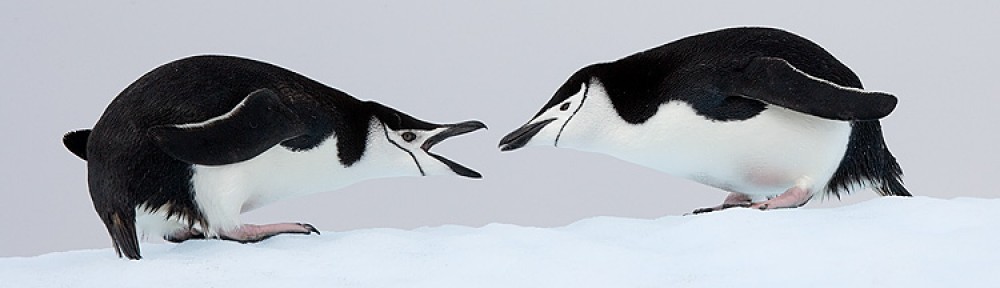
I was trying to set up a means for the admins to confer together on site rather than singly by PM  or by email, as a result, set the cat among the pigeon (skua among the penguins?) by first of all making a “password protected” page for the admins, new comments to which appeared in the “new comments” list, arousing great alarm, and in any case turned out to be visible from the dashboard.  So I tried another WP option which was to make it a “private” page, but people could still see it from the dashboard.  So I switched off that.  But then people couldn’r post OPs or receive PMs.  So I’ve restored it again.  We will keep the “private” admin page, but for those curious about it, you will find you can access its comments via the dashboard.   Which is fine by me – it wasn’t like we wanted to plot anything anyway, just have a means of conferring about stuff (security issues, strategies, plug-ins, rules etc) between our selves.  So this seems a good solution.  Nobody need get paranoid because they can always check the record, but it won’t be a prominent feature of the site.

The Modeling of Nature

As the new millennium approaches, our scientific knowledge of the universe surpasses that of any previous age. Yet, paradoxically, the philosophy of science movement is now in disarray. The collapse of logical empiricism and the rise of historicism and social constructivism have effectively left all of the sciences without an epistemology. The claims of realism have become increasingly difficult to justify, and, for many, the only alternatives are probabilism, pragmatism, and relativism.

But the case is not hopeless. According to William A.Wallace, a return to a realist concept of nature is plausible and, indeed, much needed. Human beings have a natural ability to understand the world in which they live. Many have suggested this understanding requires advanced logic and mathematics. Wallace believes that nature can more readily be understood with the aid of simple modeling techniques.

Through an ingenious use of iconic and epistemic models, Wallace guides the reader through the fundamentals of natural philosophy, explaining how the universe is populated with entities endowed with different natures – inorganic, plant, animal, and human. Much of this knowledge is intuitive, already in people’s minds from experience, education, and exposure to the media. Wallace builds on this foundation, making judicious use of cognitive science to provide a model of the human mind that illuminates not only the philosophy of nature but also the logic, psychology, and epistemology that are prerequisite to it.

With this background, Wallace sketches a history of the philosophy of science and how it has functioned traditionally as a type of probable reasoning. His concern is to go beyond probability and lay bare the epistemic dimension of science to show how it can arrive at truth and certitude in the various areas it investigates. He completes his study with eight case studies of certified scientific growth, the controversies to which they gave rise, and the methods by which they ultimately were resolved.

The Modeling of Nature provides an excellent introduction to the fundamentals of natural philosophy, psychology, logic, and epistemology.

William J. Murray has repeatedly questioned the prevalent materialist epistemology evident here at TSZ.

But are the sciences as a whole without an epistemology, and why?

What could possibly ground an epistemology of science?

More questions for Barry Arrington

At UD, Barry has written another hypocritical OP criticizing former NBC anchor Brian Williams. I have some questions for him:

Barry,

Given your own deception and dishonesty, why are you so concerned with the deception and dishonesty of Brian Williams? Are you angry that he’s encroaching on your territory?

When will you explain what happened to Aurelio Smith’s comments, and why it happened?

Will you ever explain why you deleted this entire thread?

How do you reconcile your abysmal behavior with your claim of “having a standard of integrity far beyond what the world requires”?