What’s wrong with theistic objective morality–in 60 seconds

In what seems like a proof of Nietzsche’s Eternal Recurrence, the “is morality objective or subjective” debates are playing out yet again at UD.

Here, in 60 seconds or less, is why theistic objective morality doesn’t get off the ground:

[Results not guaranteed.  May vary with individual reading speed.]

1. For objective morality to have an impact, we need to a) know that it exists, b) know what it requires, and c) know that we have reliable access to it.  We don’t know any of those things.

2.  Lacking access to objective morality, all we have left is subjective morality — what each person thinks is right or wrong. This is just as true for the objectivist as it is for the subjectivist.

3. Even if God existed and we knew exactly what he expected of us, there would be no reason to regard his will as morally binding.  His morality would be just as subjective as ours.

A look at Keiths paper

So, here is the link to a paper which Keiths claims says something about income inequality, and I say is another example of the proliferation of shoddy science.

http://pss.sagepub.com/content/early/2015/03/19/0956797614567511.abstract

The highlight of the paper is this claim:

“We found that of the 40 search terms used more frequently in states with greater income inequality, more than 70% were classified as referring to status goods (e.g., designer brands, expensive jewelry, and luxury clothing). In contrast, 0% of the 40 search terms used more frequently in states with less income inequality were classified as referring to status goods.”

Where does one begin to critique the ridiculousness of this claim? 70% of the majority of searches are for luxury goods in some states, 0% of the most searched items in other states?

If one claims the difference in search patterns from one state to another is that dramatic, shouldn’t ones bs detector already be ringing alarm bells?

And what is considered a luxury good? What is the cut-off for equal states and unequal states? Did they decide the luxury terms before or after they viewed the data? Who do they claim is doing all this searching for luxury, the haves or the have nots?

The red flags are everywhere. Isn’t it likely that they had a conclusion that they wished to reach, and that they fulfilled their own prophecy?

Expensive watches and other Veblen goods

A few months ago, my trusty old Seiko died and I found myself in the market for a new watch.  I ended up buying a 100 Seiko, solar-powered this time so that I don't have to change the battery. It looks good and keeps time perfectly.  Why spend1,000, 5,000, or10,000 on a watch that does nothing more than my $100 Seiko?
The answer, of course, is status. Thorstein Veblen got it right in his classic Theory of the Leisure Class:

Conspicuous consumption of valuable goods is a means of reputability to the gentleman of leisure.

And:

Since the consumption of these more excellent goods is an evidence of wealth, it becomes honorific; and conversely, the failure to consume in due quantity and quality becomes a mark of inferiority and demerit.

Continue reading

Questions for Christians and other theists, part 3: The Atonement

cruc

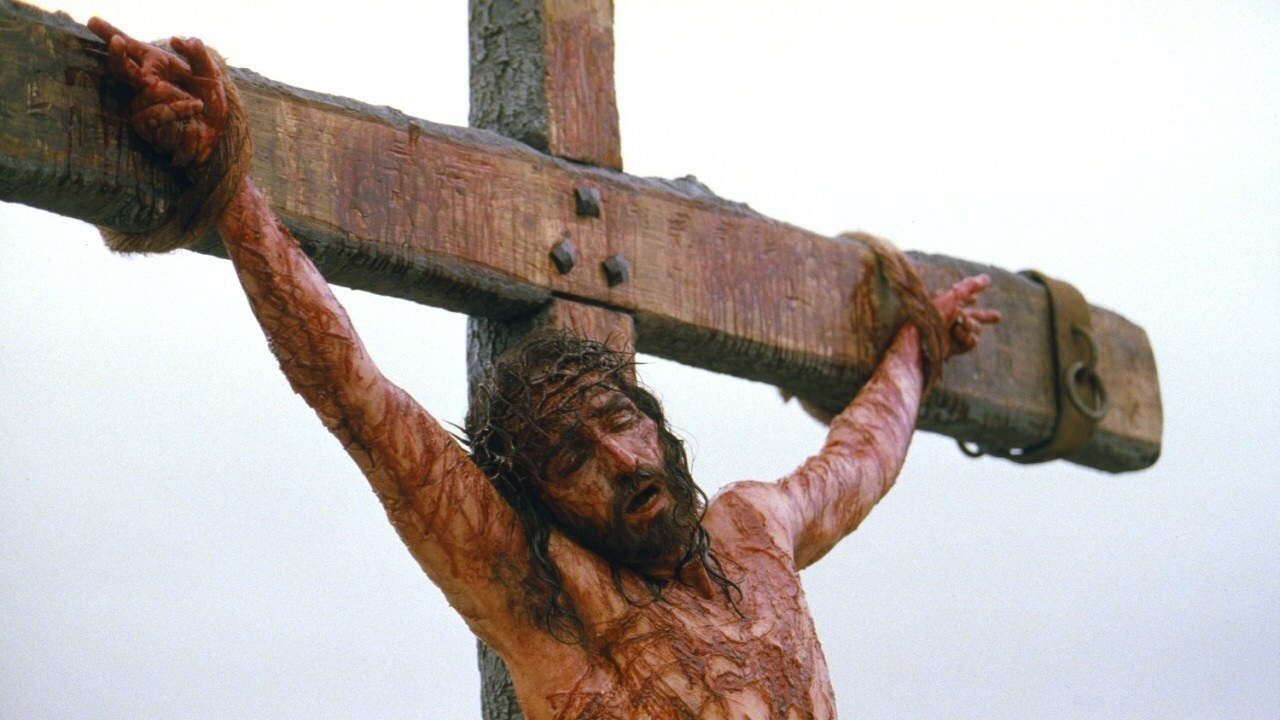
This weekend, millions of Christians will express gratitude to Jesus Christ for saving them through his sacrifice.  Few of them will be asking the obvious follow-up question: “How does that work, exactly?”

Here’s Christianity’s dirty secret: No one has a good explanation of how atonement works. There is no consensus among Christians, and none of the theories offered actually make sense.

Continue reading

Questions for Christians and other theists, part 2: Samson

In Judges 13-16, the Bible tells the bizarre story of Samson. YouTube contributor DarkMatter2525 has produced an excellent 3-part animated version of the story.

Please read the story first and then watch the three videos. If you do it the other way around, you’ll be asking yourself over and over: “Wait — does the Bible really say that?”

In the comments, I’ll pose some questions to believers regarding the story.

Samson Da Barbarian Part 2

Samson Da Barbarian Part 3

At Panda’s Thumb: An evaluation of Dembski, Ewert, and Marks’s Search For a Search argument

Tom English and I have posted at Panda’s Thumb a careful evaluation of William Dembski, Winston Ewert, and Robert Marks’s papers on their Active Information argument. We find that it does not show that we require a Designer in order to have an evolutionary system that finds genotypes with higher fitness. Basically, their space of “searches” is not limited to processes that have genotypes with different fitnesses — many of their “searches” can ignore fitness or even actively look for genotypes of worse fitness. Once one focuses on evolutionary searches with genotypes whose reproduction is affected by their fitnesses, one gets searches with a much greater chance of finding genotypes with higher fitnesses.

I suspect that most discussion of our argument will occur at PT — I have posted here to point to that post. If people want to discuss the matter here, I will try to comment here as well. But you can also comment at PT.

2LOT and ID entropy calculations (editorial corrections welcome)

Some may have wondered why me (a creationist) has taken the side of the ID-haters with regards to the 2nd law. It is because I am concerned for the ability of college science students in the disciplines of physics, chemistry and engineering understanding the 2nd law. The calculations I’ve provided are textbook calculations as would be expected of these students.
Continue reading

Highly recommended: ‘Going Clear: Scientology and the Prison of Belief’

If you’re fascinated by irrational beliefs and the people who hold them, HBO’s new Scientology documentary is a must-see:

It premieres on HBO Sunday, March 29th, at 8 pm. For more airtimes, go here and mouse over “Schedule” in the lower right corner.

(I saw it yesterday in a San Francisco theater. They’re doing a very limited theatrical release so that the film will be eligible for Oscar nominations.)

Algorithmic Specified Complexity and the Game of Life

Ewert, Dembski, and Marks have a forthcoming paper: “Algorithmic Specified Complexity and the Game of Life” – It appears to be behind paywalls though. Can anyone provide a copy?

Please note, any comments not directly addressing the math or mechanics of this post will moved to Guano (thanks Neil and Alan)

My earlier post:

1. In Conway’s Life: http://en.wikipedia.org/wiki/Conway%27s_Game_of_Life
2. There is the Glider-Producing Switch Engine http://conwaylife.com/wiki/Glider-producing_switch_engine
3. It is coded by 123 “On Cells” but requires a space of 67×60 in a specific configuration.
4. That’s 4,020 bits, > UPB.
5. It contains well matched parts : 4bli,3blo,2bee,1boat,1loaf,1ship,1glider http://wwwhomes.uni-bielefeld.de/achim/moving.html
6. It occurs naturally out of randomly configured dust : http://wwwhomes.uni-bielefeld.de/achim/moving.html
7. It can evolve from a much smaller entity (“time bomb” – 17 active cells): http://conwaylife.appspot.com/pattern/timebomb

Possible criticisms:

Information is hidden somewhere
This is under “standard” Life rules (B3/S23) which means there is precious little exogenous information:

1.Any live cell with fewer than two live neighbours dies, as if caused by under-population.
2.Any live cell with two or three live neighbours lives on to the next generation.
3.Any live cell with more than three live neighbours dies, as if by overcrowding.
4.Any dead cell with exactly three live neighbours becomes a live cell, as if by reproduction.

(Source: http://en.wikipedia.org/wiki/Conway%27s_Game_of_Life#Rules)

These are not self-replicating
This is not actually a requirement of Specified Complexity and it does send off some of its parts into the life universe.

Also interesting – some musings on how big a life universe might have to be to support self-replicating life: http://ieet.org/index.php/IEET/more/prisco20140915

More 2LoT inanity at Uncommon Descent

Springtime is approaching. The 2LoT truthers are flocking at Uncommon Descent, hoping to find mates so that they can pass their second law inanity on to the next generation. Until yesterday, I was observing their bizarre mating rituals up close. Now I have been banned (again) from the nesting site, for pointing out a particularly ugly and infertile egg laid by kairosfocus.

Many others have been banned from the site as well, but we can still observe the spectacle through our high-powered binoculars. At this distance, our laughter will not disturb the awkward courtship rituals, as the participants preen and flaunt their ignorance in front of potential mates.

Hence this thread. Feel free to post your observations regarding the current 2LoT goings-on at UD and the perennial misuse of the 2LoT by IDers in general.

Spontaneous generation of >500 bits of functional information as well matched sub-components

It’s a quicky:

1. In Conway’s life: http://en.wikipedia.org/wiki/Conway%27s_Game_of_Life
2. There is the Glider-Producing Switch Engine http://conwaylife.com/wiki/Glider-producing_switch_engine
3. It is coded by 123 “On Cells” but requires a space of 67×60 in a specific configuration.
4. That’s 4,020 bits, > UPB.
5. It contains well matched parts : 4bli,3blo,2bee,1boat,1loaf,1ship,1glider http://wwwhomes.uni-bielefeld.de/achim/moving.html
6. It occurs naturally out of randomly configured dust : http://wwwhomes.uni-bielefeld.de/achim/moving.html
7. It can evolve from a much smaller entity (“time bomb” – 17 active cells): http://conwaylife.appspot.com/pattern/timebomb

Thoughts?

Questions for Christians and other theists, part 1: the Garden of Eden

Christianity and other forms of theism are full of oddities.  This is the first of a series of posts pointing out the oddities and asking theists to explain how they understand, deal with, or rationalize these oddities.

Today’s question:

Adam and Eve were banished from the Garden of Eden for eating the fruit of the tree of knowledge of good and evil.  If they didn’t know good from evil until after eating the fruit, then they were punished for doing something they didn’t know was evil.

Does this make sense to you? If so, why?

Barry Arrington fails at logic again

Here’s Barry’s latest:

Fred, Bob and Saber-Toothed Tigers

I’ve saved the web page in case he ‘disappears’ it, as he tends to do.

Barry is making the case that some irrational beliefs may cause outcomes that are still beneficial and so are not selected against (religion, anyone?).

He does this in reply to Piotr’s comment:

“As far as I can see, thought processes which allow us to understand the world and make correct predictions (and so are empirically “true”) are generally good for survival.”

Please note “GENERALLY good for survival”

gen·er·al·ly
ˈjen(ə)rəlē/
adverb
1.
in most cases; usually.

(from google search)

Barry, its time for you to learn about ‘distributions’. Do you think the correctness of belief is orthogonal to taking an action that is likely to improve survival chances?

I think given this and yesterdays comment:

“Your comment is classic.

ID Supporter: You can’t make a dog from a finch.

Darwinist: Yeah, but some finches are really really different from each other. I have now refuted your point.”

(Dogs don’t give birth to finches, Checkmate evolution!) – You should actually take some biology and logic classes. Spend less time on your apologetics and ‘rules of logic’ and actually learn something about biological origins.